
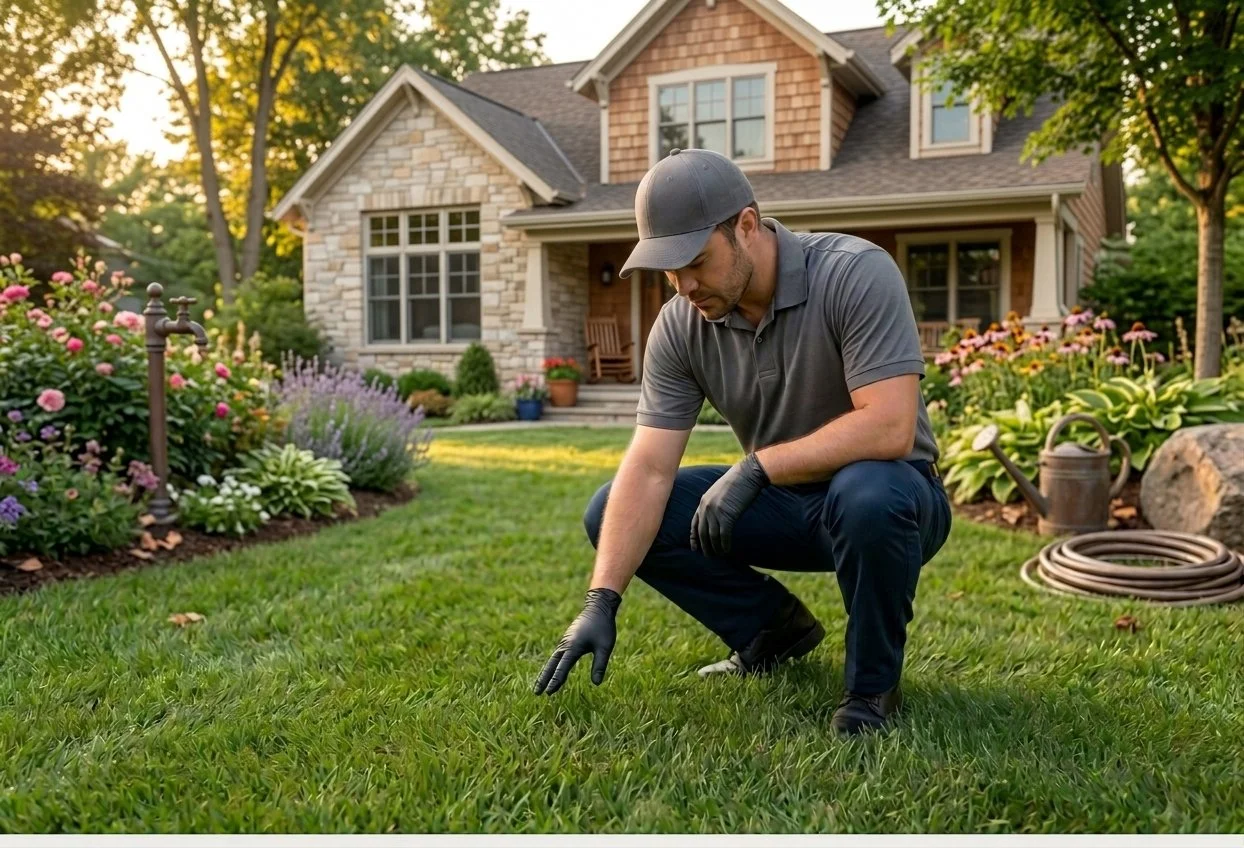
Keep Gophers Out - For Good
Your yard is your investment. Relax, we'll find what's tunneling under it and stop the damage.

Signs of Gopher Activity
Fan-Shaped Mounds
Crescent or fan-shaped piles of loose soil pushed out to one side, often appearing overnight and sometimes in a line across the yard.
Plugged Openings
Unlike rats or armadillos, gophers seal their tunnel entrances behind them. If you see mounds but no open hole, that plug of dirt off to one side is your confirmation.
Sunken Trails
Soft, sinking paths running across the lawn that give way underfoot. These follow the tunnel system just below the surface.
Wilting or Dying Plants
Plants that suddenly droop or die with no visible cause. Gophers feed on roots, bulbs, and tubers from below, so the damage is done before anything shows above ground.
Damaged Irrigation and Wiring
Chewed drip line, broken sprinkler risers, and severed low-voltage landscape wiring. Water loss and dead patches often show up weeks before anyone connects it to tunneling.
Mowing Damage
Fresh mounds dull and chip mower blades, and repeated tunneling under sidewalks, driveways, pavers, and pool decks removes the support underneath.
Home Remedies
-
There are a few home remedies people try on gophers. Results vary widely, and it's worth knowing which ones have something behind them:
Castor oil: The most reliable of the home options. Castor oil makes soil and roots unpalatable and is the active ingredient in most commercial gopher repellents. Granular products are watered into the soil around the area you want to protect. It pushes gophers elsewhere rather than eliminating them, and it needs reapplication after heavy rain.
Capsaicin and hot pepper: Hot pepper mixes applied to soil or plant roots can discourage feeding in a small area, like a single raised bed. Rain and irrigation wash it away quickly, so expect to reapply often.
Flooding the tunnels: Running a hose into a burrow rarely works in Central Florida. Our sandy soil drains too fast to fill the system, and the gopher simply re-digs any tunnel that collapses.
Used cat litter or predator scent: Placing soiled litter in an open tunnel is a common suggestion. Gophers usually plug off that section and keep working from another direction.
Sonic and vibrating stakes: These test poorly in field trials. Gophers may shift to another part of the yard for a few days and come right back.
-
There are also natural approaches that focus on protection rather than elimination:
Wire baskets on new plantings: Lining the planting hole of a new tree or shrub with galvanized wire mesh protects the root ball while it establishes. This is the single most effective non-chemical step you can take.
Hardware cloth under raised beds: Stapling ¼- or ½-inch galvanized mesh to the bottom of a garden box keeps gophers out permanently.
Buried mesh barriers: Mesh buried along a garden or bed perimeter, roughly 18 to 24 inches deep with a few inches turned outward at the bottom, blocks tunneling into the protected area.
It is important to note that home and natural remedies are usually less effective than professional treatment, and most of them relocate the problem rather than resolve it. They are, however, a safe place to start.
If gopher activity is spreading, damaging irrigation, or undermining hardscape, it is best to contact a professional pest control company. They will have the experience and expertise to locate the main tunnel system, resolve the activity, and help keep it from coming back.
Our Safe DIY Suggestions
Level the Mounds and Watch
Rake out existing mounds. It won't affect the animal, but it turns your lawn into a monitor: any new mound means the gopher is still active, and where it shows up tells you which way the tunnel runs.
Clear Cover Along the Edges
Tall weeds and brush along fence lines and property borders give gophers cover while they establish. Keeping those edges mowed makes new activity easier to spot early.
Water Deeply, Not Daily
Deep, infrequent watering builds a healthier lawn and makes the soil less inviting than constant surface moisture does.
Don't Wait on It
One gopher and three mounds is a small job. The same animal working an established tunnel network across half a yard for six months is not. Early activity is the cheapest activity to deal with.
Gophers FAQs
-
Roots, tubers, bulbs, and underground stems. They'll also pull whole plants down into the tunnel from below. They feed entirely underground and rarely surface, which is why the damage usually appears before the animal does.
-
Not to people. Gophers aren't aggressive, they avoid contact, and they don't pose the disease risk rats do. The danger is to your property: killed trees, dead sod, chewed irrigation and wiring, collapsing tunnels under walkways, and undermined driveways and pool decks.
-
Sandy, well-drained soil and a good food supply. Central Florida has both, and most Polk County subdivisions sit on exactly the soil gophers prefer. They travel underground from adjoining pasture, pine, greenbelts, and undeveloped lots, so properties along those edges see activity first.
-
Usually one to three years in the wild. Southeastern pocket gophers are solitary and territorial, so an extensive mound system across half an acre is often the work of just one or two animals—which is why targeted treatment works well on them.