

Let Us Evict the Bats!
We make your home feel like home again. Feel at ease—we’ll take care of your Bat problem.
Signs of a Bat Infestation
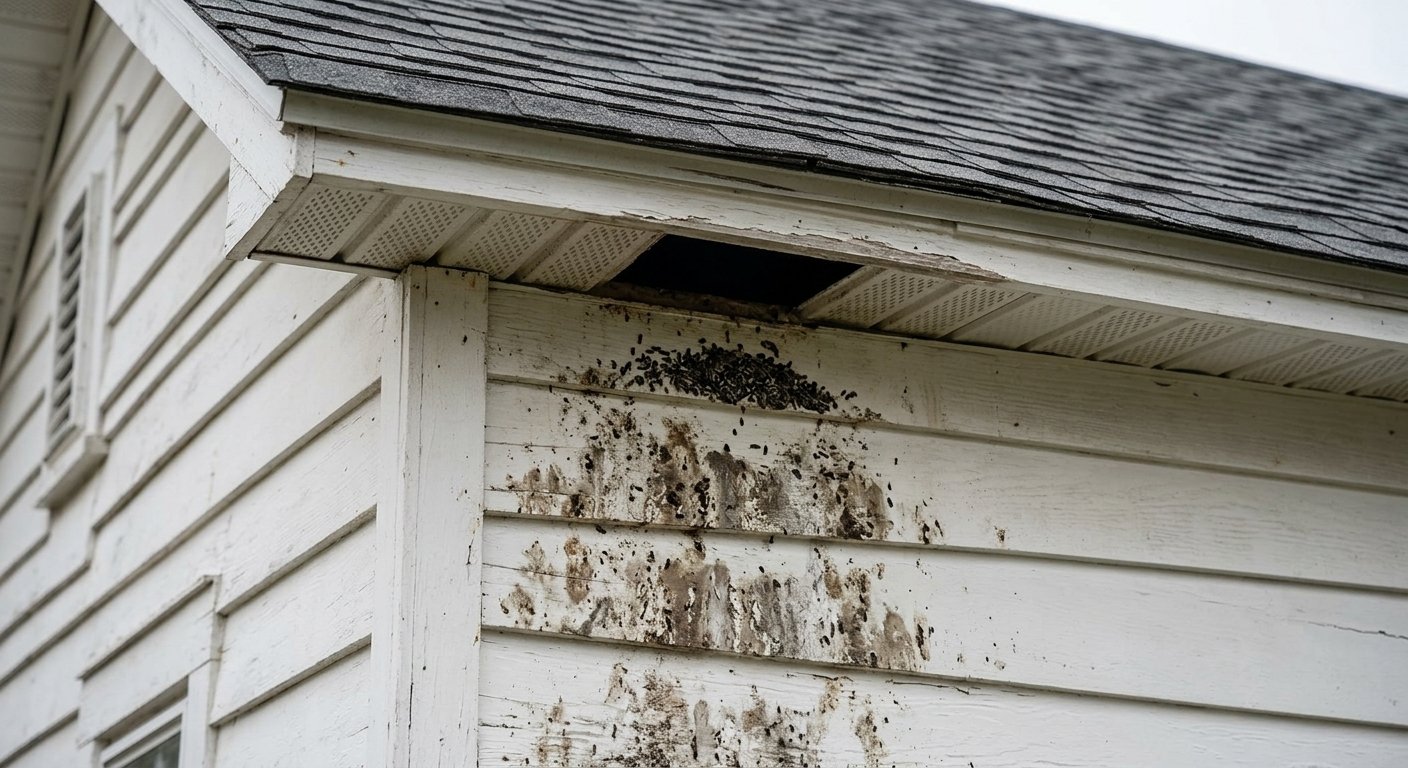
Guano Below Entry Points
Bat droppings collect in piles beneath the opening bats use. Guano looks like dark, elongated pellets that crumble to a glittery powder when crushed—the shine comes from insect exoskeletons. Rodent droppings stay hard and don't crumble that way.
Ammonia Odor
A strong, sharp ammonia smell from accumulated guano and urine, usually strongest in the attic or in rooms directly below the roost.
Chittering and Scratching at Dusk
High-pitched squeaking, chittering, and scrabbling in walls or the attic, concentrated around sunset and again before dawn as bats leave and return. Bat noise follows that schedule closely—rodent noise doesn't.
Bats Emerging at Sunset
Stand outside about 20 minutes before dark and watch the roofline. Bats leaving in ones and twos from a soffit gap, gable vent, or ridge cap is the clearest confirmation you'll get, and it tells us exactly where to work.
Rub Marks and Staining
Dark, greasy staining around a gap where bats squeeze in and out repeatedly. Openings as small as 3/8 of an inch are enough.
Stains on Ceilings or Walls
Brown or yellow discoloration bleeding through drywall below a roost, from urine and guano saturating insulation over time.
DIY Home Remedies for Bats
-
People try a lot of things before they call. Here's an honest assessment of the common ones:
Mothballs and naphthalene: Illegal to use this way, hazardous indoors, and bats ignore them at any concentration that's safe for your family.
Ultrasonic repellers: No reliable evidence they move an established colony. Bats navigate by echolocation and habituate quickly.
Bright lights or fans in the attic: May shift a colony to a different part of the attic, but it doesn't get them out of the building.
Sprays, foggers, and insecticides: Nothing is legally labeled for bats anywhere in the United States. Using a pesticide on them is illegal in Florida.
Sealing the hole at night: The most common and most damaging mistake. Seal while bats are inside and they die in the wall—and the survivors look for a new way out, often into your living space.
-
There are safe steps you can take, and they're all about sealing rather than removing:
Seal openings bats aren't using. Anywhere on the structure with no guano and no rub marks can be closed off now, at any time of year.
Screen your vents. Gable vents, roof vents, and attic fans are among the most common entry points on Central Florida homes. Heavy-gauge hardware cloth keeps bats out while letting the vent work.
Close the interior route. Weatherstrip attic hatches and seal gaps around pipes, wiring, and can lights so a bat can't get from the attic into a bedroom.
Put up a bat house. Bats eat an enormous volume of mosquitoes and night-flying insects. A bat house mounted well away from the home gives a displaced colony somewhere to go and keeps that benefit on your property.
Watch and document. Note where bats emerge at dusk and roughly how many. That information speeds up the job and lowers your cost.
Bat work is one area where DIY genuinely makes things worse. If you have bats, contact a professional who does exclusion and knows Florida's maternity season rules.
Bat Prevention Tips
Seal gaps before they find them
Bats get in through openings as small as 3/8 of an inch. Check soffit and fascia joints, ridge caps, gable vents, chimney flashing, and the seams where roof planes meet. Sealing beats removing every time.
Watch the roofline at dusk
A few minutes of watching around sunset a couple of times a year catches a new roost while it's one or two bats instead of an established colony. Early is far cheaper.
Screen your vents
Gable vents, roof vents, and attic fans are the most common entry points on Central Florida homes. Heavy-gauge hardware cloth keeps bats out while the vent keeps doing its job.
Consider a bat house
Bats eat huge numbers of mosquitoes and other night-flying insects. A bat house mounted away from the home gives them somewhere else to go and keeps that benefit on your property.
The Easiest Way
to Get Rid of Bats
1
Schedule our Exterminator
Call us today for a free inspection:
Call before 2 pm and get same-day service
2
Treatment
Our certified tech will check out your property and create a pest control plan that fits exactly what’s going on. Our treatments are tailored specifically to your home and the unique challenges you face.
3
Follow Up
After each visit, you’ll receive a detailed service report along with practical tips to help prevent future infestations. We return on a regular schedule throughout the year, strengthening your protection over time.
Bat FAQs
-
Insects, in large volume. A single bat can eat hundreds to thousands of mosquitoes, beetles, and moths in a night. Florida's bats are all insect eaters—none feed on blood, fruit, or anything in your home.
-
Bats aren't aggressive and won't attack. The real risks are indirect: rabies exposure from handling a bat or being bitten, and histoplasmosis, a lung infection from fungal spores in accumulated guano. Both are avoidable. Don't handle bats, and don't disturb a large guano deposit without proper protective equipment. If anyone has been bitten or scratched, or a bat was in a room with someone sleeping, contact a doctor or the health department promptly.
-
They found a gap. Bats need as little as 3/8 of an inch, and Central Florida roofs offer plenty—soffit and fascia joints, gable and roof vents, ridge caps, chimney flashing, and the seams where roof planes meet. Attics are warm, dry, and undisturbed, which is exactly what a colony wants.
-
Far longer than most people expect. Many species live 10 to 20 years, and some individuals reach 30. Bats also raise only one pup a year, which is part of why they're protected—a lost colony doesn't bounce back quickly.